A Journey Through the Winemaking History of Nemea
Long before wine lists, tasting notes, or vineyard tours existed, Nemea was already a land of vines. Set among soft hills in the northeastern Peloponnese, this region has quietly shaped Greek wine culture for thousands of years. Today, it stands as Greece’s largest Protected Designation of Origin (PDO) wine zone. But its story begins far earlier than modern appellations.
To understand Nemea is to follow a thread that weaves mythology, ancient trade, monastic tradition, and contemporary innovation into one enduring glass.
Where Myth Meets the Vine
In Greek mythology, Nemea was the land of the legendary Nemean Lion, defeated by Hercules in his first labor. Yet beyond myth, archaeology tells a more grounded tale. Excavations reveal that viticulture in the area dates back to antiquity, with evidence of grape cultivation and wine storage found near ancient settlements.
Wine was not merely a drink in ancient Nemea. It was commerce, ritual, and hospitality. Amphorae carrying Nemean wine traveled across the Mediterranean, making the region an early ambassador of Greek viticulture.
The Rise of Agiorgitiko
While many grapes have passed through Greek vineyards over millennia, one became inseparable from Nemea’s identity: Agiorgitiko.
Named after the village of Agios Georgios, this red variety adapted perfectly to Nemea’s varied microclimates and altitudes. Over time, it evolved into a grape capable of expressing both youthful vibrancy and long-aging depth. From lighter, fruity styles to structured, oak-matured wines, Agiorgitiko became Nemea’s signature and the heart of its PDO status.
By the mid-20th century, as Greek wine began organizing formal appellations, Nemea was officially recognized as a Protected Designation of Origin. This moment secured Agiorgitiko’s place on the world wine map.
From Bulk Wine to Boutique Excellence
For much of the last century, Nemea’s wines were produced in large volumes, often destined for domestic consumption. But the 1980s and 1990s marked a turning point. A new generation of winemakers invested in modern equipment, temperature-controlled fermentation, and vineyard zoning.
Small family estates emerged alongside established producers. Focus shifted from quantity to quality. Vineyard management improved. International exposure grew. Nemea began appearing on wine lists beyond Greece, earning respect for consistency and character.
Today, the region hosts dozens of wineries, each interpreting Agiorgitiko in its own way, while also experimenting with international varieties and fresh white expressions.
A Landscape That Shapes the Wine
One of Nemea’s secrets lies in its geography. Vineyards range from low valley floors to hills exceeding 800 meters in altitude. This variation creates distinct microclimates, influencing ripening speed, acidity, and aromatic profile.
Warm days build rich fruit. Cool nights preserve freshness. Limestone and clay soils add structure. The result is a remarkable diversity of wine styles within a single appellation.
This complexity has become a key focus of modern Nemean winemakers, who increasingly highlight single vineyards and altitude-driven expressions.
Wine Culture Today
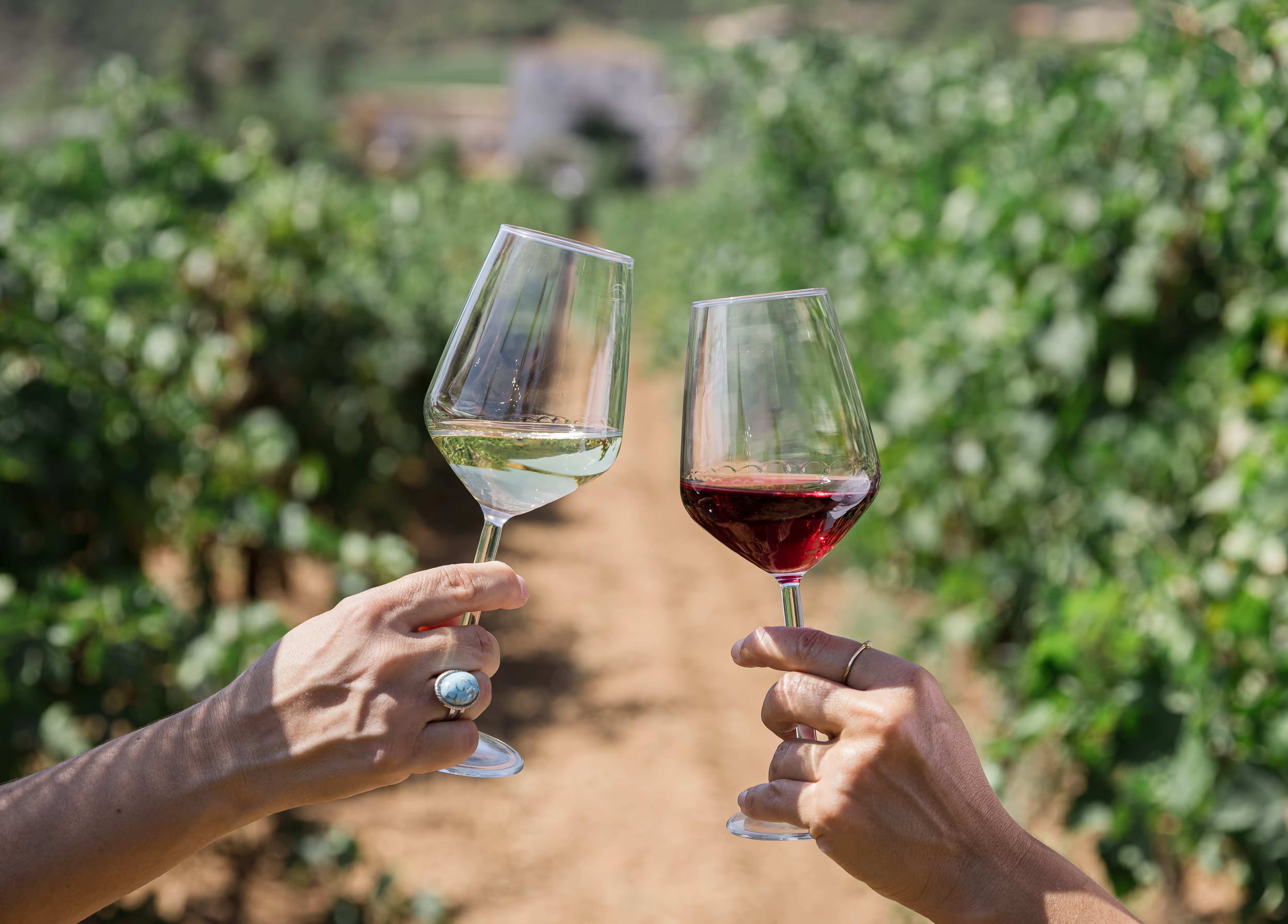
Modern Nemea is not just about production. It has embraced wine tourism with open cellars, tasting rooms, vineyard walks, harvest events, and annual festivals like the Great Days of Nemea. Visitors come for more than wine. They come for stories, landscapes, and connection.
Yet beneath every new tasting room and stainless-steel tank lies the same ancient rhythm of vine, soil, and season.
The Legacy Continues
Nemea’s winemaking history is not a tale locked in the past. It is alive in every harvest, every barrel, every bottle shared at a table. From amphorae in antiquity to contemporary glassware in modern tasting rooms, the essence remains unchanged: a place where land and human care transform grapes into culture.
For travelers, wine lovers, and curious explorers, Nemea offers more than a sip of Greek wine. It offers a journey through time.